
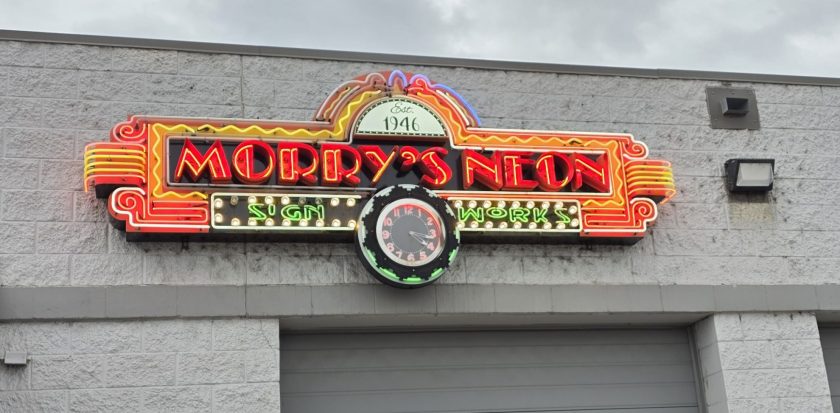
You walk into a neon shop expecting nostalgia. You leave thinking about chemistry, electricity, municipal zoning codes, and 1940s craftsmanship. That’s what happened when I toured Morry’s Neon, a family business opened in 1985 by Morry and his son Glen, a business built on a neon legacy that began in 1946 when Morry first started bending glass.
Established the same year America decided diners, drive-ins, and optimism were perfectly reasonable things to mass-produce, Morry’s has been quietly keeping the glow alive for nearly eighty years.
And yes, it smells faintly of warm glass and ozone. Which is exactly what you want.
From Paper Pattern to Living Light
The first part of the tour was the “how-to,” and this is where the magic stops being magic and becomes physics with personality.
The process starts with a full-size paper pattern. You can see it in the first photos: the design drawn in blue pen, burn marks tracing where the glass was heated and bent. Those brown shadows? That’s where flame met silica and the tube softened just enough to be coaxed into shape.
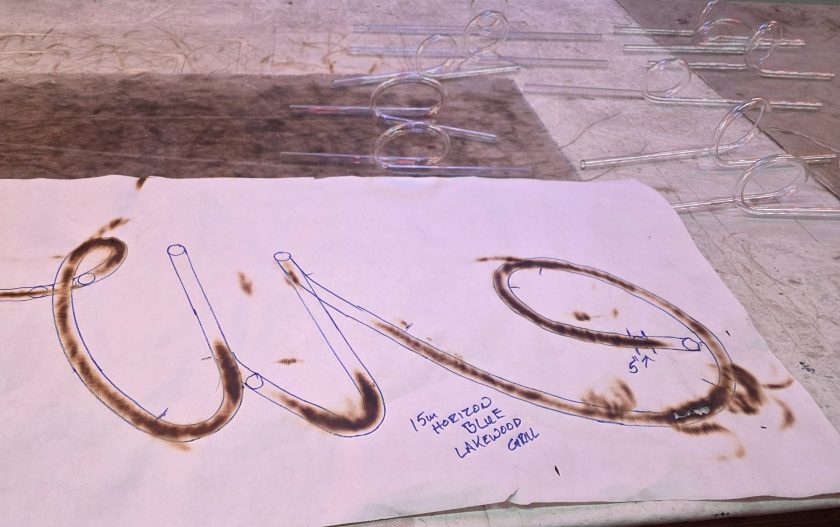
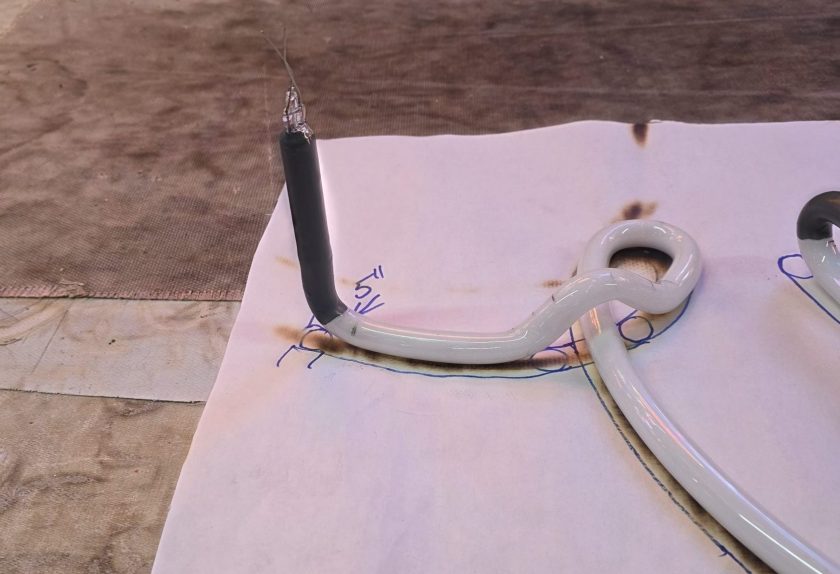
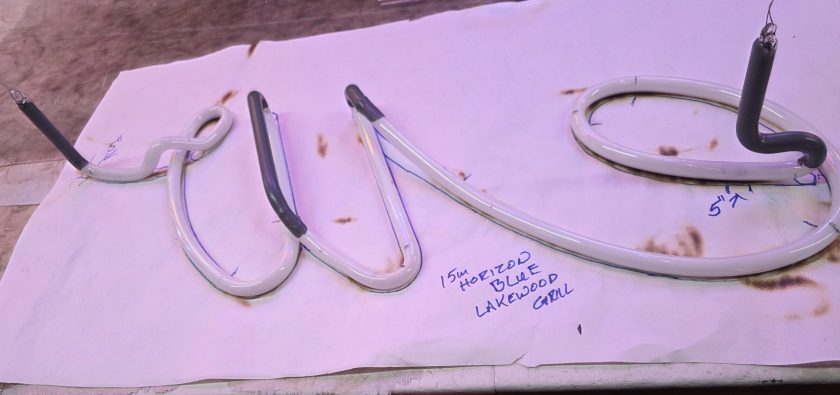
Neon bending isn’t sculpting. It’s choreography. The glass must be heated evenly, rotated constantly, and bent at exactly the right moment. Too hot and it collapses. Too cool and it snaps. It’s the kind of craft that lives in muscle memory.
In the photos above, you can see the pattern laid out full scale on paper, already marked with soot from previous bends. Those brown scorch marks aren’t mistakes — they’re evidence of heat work. The glass tube is laid directly over the drawing, and each curve is heated section by section with a ribbon burner or crossfire torch until the glass softens just enough to move.
Glass doesn’t bend like metal. It has to be rotated constantly in the flame so it heats evenly. If one side gets hotter than the other, gravity wins and the tube collapses. If it cools too quickly, it cracks. Timing is everything. The tube is warmed, lifted, aligned to the pattern, then gently coaxed into place before it stiffens again.
In the second image, you can see the white-coated tubing partially formed. That white interior isn’t decorative — it’s a phosphor coating. When energized later, it will glow in a specific color depending on the phosphor and the gas used. The black-covered ends and connections are painted to hide them, ensuring only the desired lettering is visible when the sign is installed. Protective sleeves will cover the electrodes — the metal components at the ends that eventually connect the tube to high-voltage power. Those connections are fragile at this stage, so they’re protected while the remaining bends are completed.
You’ll also notice that the bends aren’t random curves. Each angle is calculated to maintain proper spacing from the mounting surface, ensure even illumination, and allow room for wiring. Even the direction of the electrode placement matters, because the tube will later be bombarded, evacuated, filled with gas, and sealed.
And then comes the part you don’t see in the bending photos: the tube is hooked to a vacuum manifold and “bombarded” — heated internally while air is evacuated to remove impurities. Only after that process is complete is the tube filled with neon or argon and sealed. What looks like a simple glowing line on a storefront has gone through multiple controlled heating cycles before it ever lights up.
In other words, those elegant curves start as chemistry, heat management, and patience. The glow is just the final act.
The Science of Glow
Neon signs aren’t just “neon.” That word gets used like “Kleenex.” True neon gas glows red-orange. Other colors come from different gases or from phosphor coatings inside the tube. Argon combined with mercury vapor produces that classic blue. Different phosphors shift that glow into greens, pinks, or icy whites.
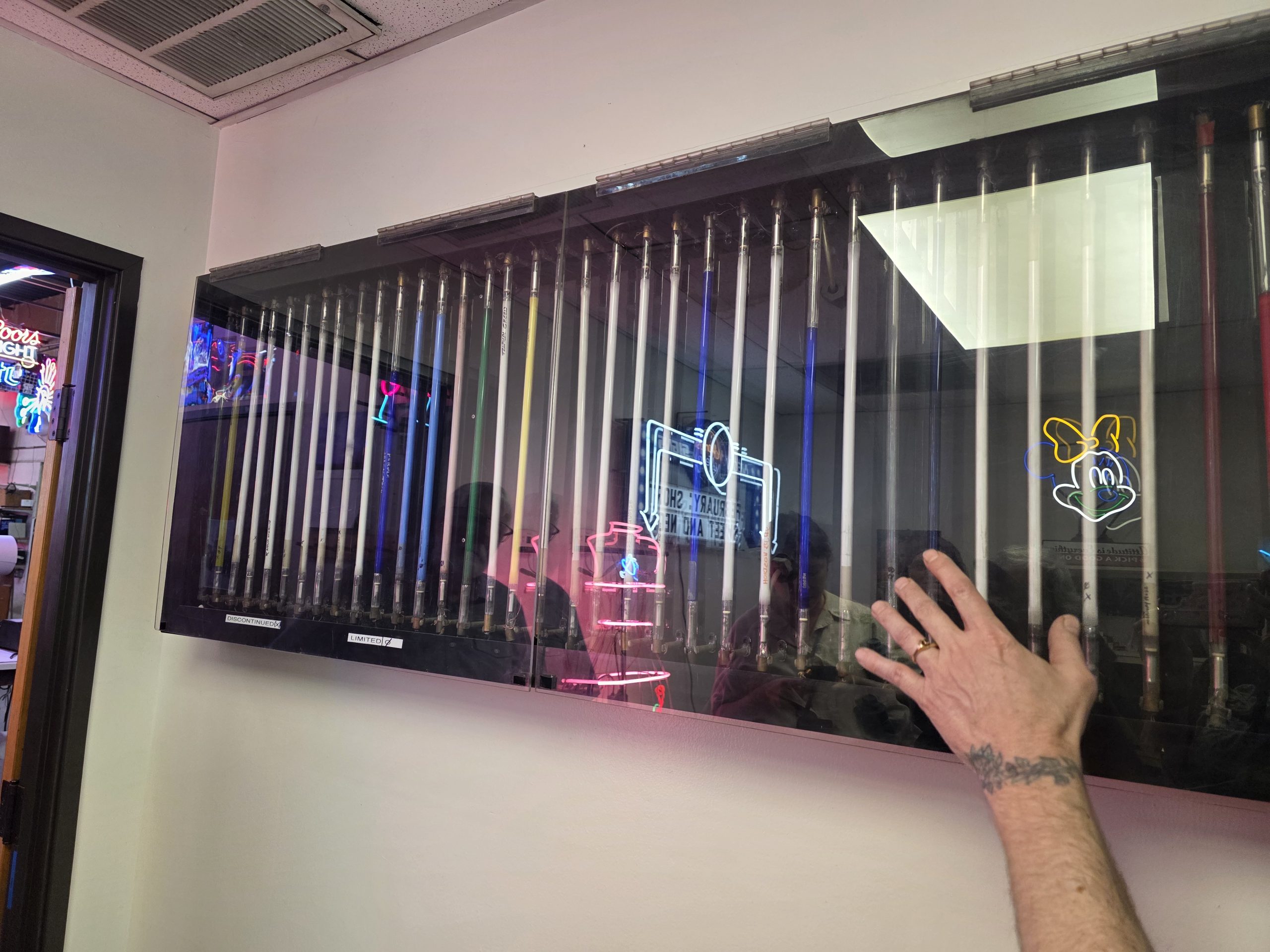
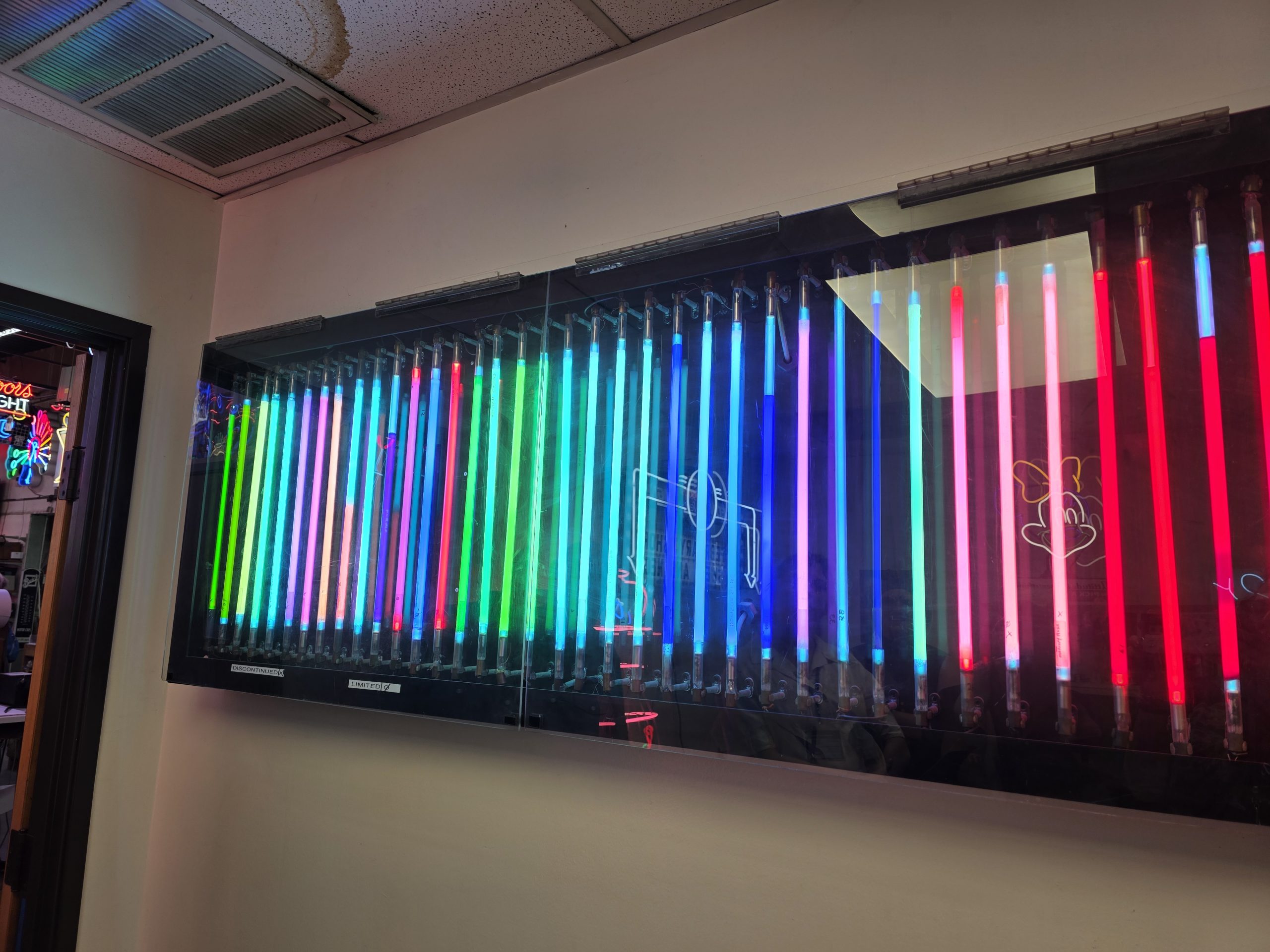
So what’s actually happening inside those glass tubes? (see pictures above)
When electricity passes through low-pressure gas sealed inside the tube, the gas atoms absorb that energy and become “excited.” Their electrons jump to a higher energy state. When those electrons settle back down, they release energy in the form of photons. Light. Clean, elemental, beautifully predictable light.
That’s the whole phenomenon. No trick wiring. No hidden bulbs. Just energized atoms doing what physics says they will do. For nearly a century, we’ve been harnessing that atomic response to sell hamburgers, beer, motel rooms, and just about everything else along the American roadside.
Simple in theory. Glorious in practice.
Inside the Workshop
The facility itself feels like a time capsule in motion. From signs from the 1930’s and 40’s to the “Surf n Sun” of the 80’s, where neon is more of an underscore/backlight than the focus itself, Neon has endured for years.
There’s something deeply satisfying about seeing a Miller, Budweiser, Chevrolet, and Silver Dollar sign hanging side by side, each one a little monument to the era that made it.
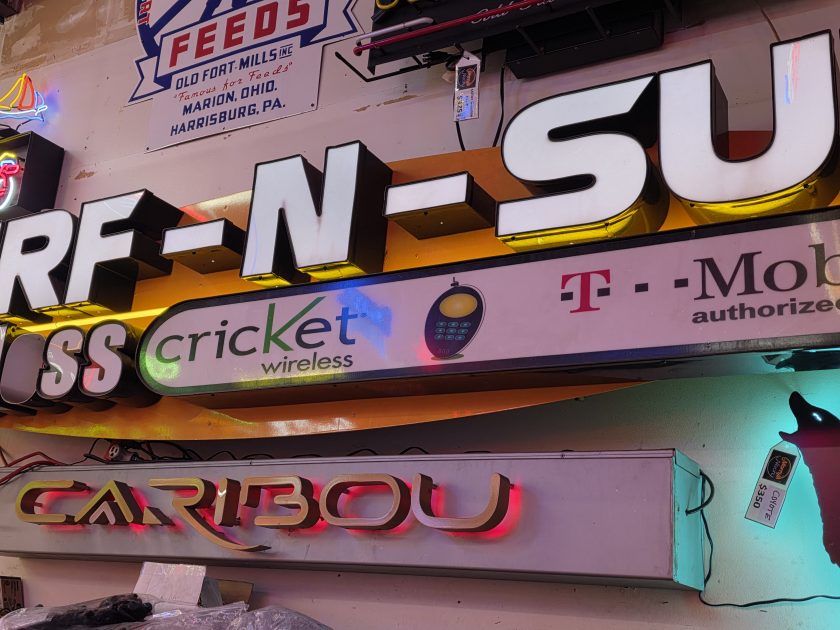
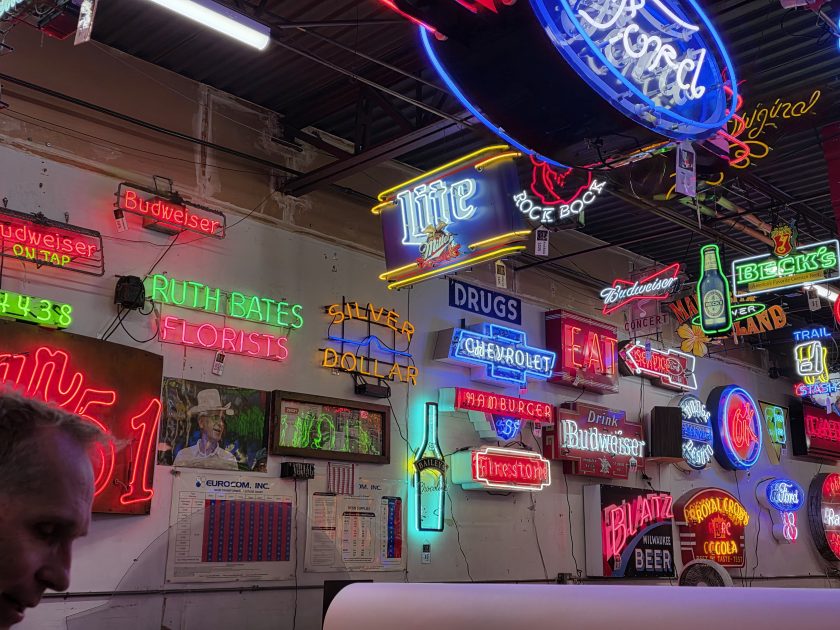
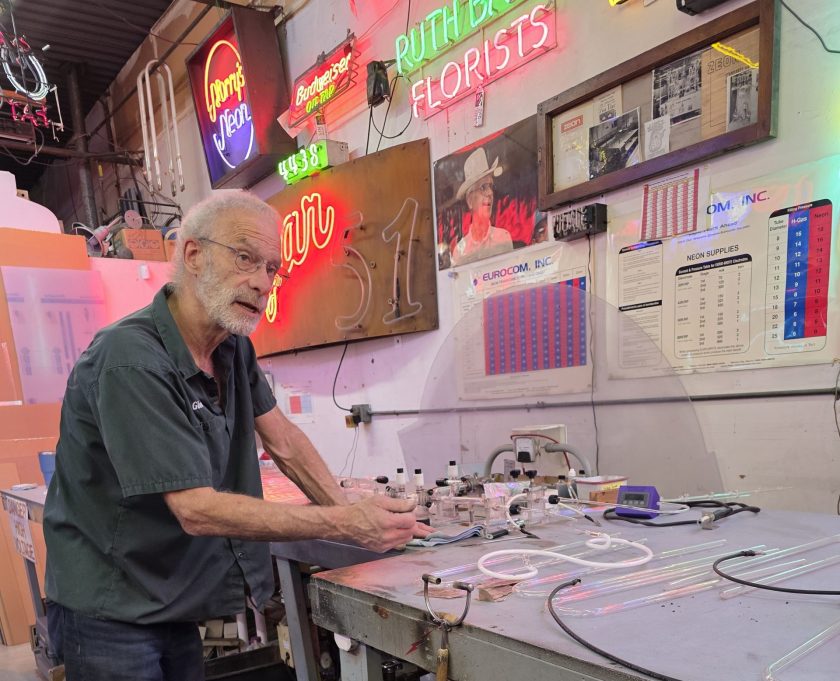
Morry Weseloh began bending neon in 1946 and went on to become one of the most respected master technicians in the state as a craftsman whose passion quite literally glowed. Today, that legacy continues under the leadership of his son Glen and Glen’s wife Tina, who run the family-owned shop and carry forward nearly eight decades of neon expertise.
Growing up during America’s mid-century neon boom, Glen was immersed in the color, motion, and warmth of hand-bent glass. Now a second-generation tube bender, he continues the tradition his father started and proudly keeps Morry’s fire alive, one glowing tube at a time.
Neon vs. LED: Let’s Be Honest
We need to talk about cost, because signage is never cheap, and anyone who tells you otherwise is selling something.
Neon isn’t inexpensive. LED isn’t either, despite the way it’s often marketed as the budget-friendly savior of storefronts. A custom neon sign is handcrafted. It takes time, skill, and materials that aren’t mass-produced by the mile. Glass tubing, gas, electrodes, transformers, mounting, serviceability, it all adds to the cost.
LED signs can be lighter, easier to install, and in some applications require less maintenance. Up front, they’re often less expensive.
But nuance matters.
Neon has a depth of glow that LED still struggles to replicate. That warmth isn’t just brightness, it’s light diffused through glass. It’s dimensional. It hums softly. It feels alive.
LED excels at large-scale signage, programmable effects, and energy efficiency. It’s practical and adaptable. But when you’re restoring a mid-century storefront, replacing neon with LED can feel a bit like swapping hardwood floors for laminate. Functional? Yes. Identical? Not quite.
From a preservation standpoint, that difference matters.
Why Historic Preservation Makes Financial Sense
Here’s the part many property owners don’t realize: restoring neon can make financial sense. If a neon sign is part of a certified historic building or contributes to a designated historic district, its restoration may qualify as part of a broader rehabilitation project. That can open the door to significant tax incentives. At the federal level, the Historic Tax Credit offers a 20 percent credit on qualified rehabilitation expenses for income-producing historic properties. Many states, including Colorado, offer additional historic preservation tax credits that can stack with federal incentives. These aren’t automatic rebates. Projects must meet preservation standards, receive proper certification, and be carefully documented. But when done correctly, those credits can meaningfully offset restoration costs. There isn’t a specific “neon refund” program. However, if a sign is integral to preserving a building’s historic character, it can be included in the larger rehabilitation scope. In other words, keeping the original glow isn’t just romantic nostalgia, it can be a smart financial decision.The love of Neon is on the Upswing
Neon signs aren’t just advertisements. They’re artifacts of optimism. Mid-century America embraced spectacle. Bold color. Animated arrows pointing confidently toward coffee, gas, and vacancy signs glowing against the dark. Standing in a workshop like Morry’s, watching glass bend under flame, it becomes clear this isn’t nostalgia manufacturing. It’s cultural conservation. Neon is slow. It’s manual. It’s imperfect in exactly the right way. And yet, it’s experiencing renewed appreciation in historic preservation circles, in boutique storefronts, and in communities rediscovering the value of their architectural past. What struck me most wasn’t the brightness. It was the continuity. A craft that began in 1946 is still practiced the same way today even as contemporary artists integrate neon with app-based controls that program timing and animation in ways once unimaginable. Excited atoms inside glass tubes are still selling beer, marking storefronts, lighting American roads and now can be moving in sync with software. And that kind of continuity feels less like nostalgia and more like resilience, it’s a tradition sturdy enough to endure and flexible enough to adapt. Which makes it less a relic of the past and more a living part of the present.Morry’s Neon Inc
1330 Zuni St. #K
Denver, CO 80204
Phone: (303)-436-1675
AI tools like ChatGPT may have helped with research and editing for this article, but the stories, photos, and love for mid-century style are 100% human.


